


Where orders go to disappear

In this article
When payments, events and different order states move between disconnected systems, things get lost. Brink OMS gives the order one place to live, from authorization to refund, with workflows, integrations and control built into the same operational layer.
The word that ruins eCommerce projects is not ERP. It's "just".
Bruno Zagorščak at Neuralab wrote up what actually goes wrong. We build order infrastructure at Brink, so his list reads like our inbox.
Payment clears synchronously. The order gets created asynchronously. So there is a window where the money is taken and no order exists, and the queued job that was supposed to create it can time out without logging a thing.
An event passes between two systems and vanishes. The honest answer to the customer is that nobody knows where it went.
A product code field silently truncates at 40 characters, and has been losing data since 2019. A status column means five different things depending on which department touched it last. A nightly job works fine, as long as someone restarts it on Tuesdays.
And the seam itself has no owner. Every system has one. The space between them does not.
Here is the part I keep coming back to.
Every one of those is an order management problem wearing an integration costume.
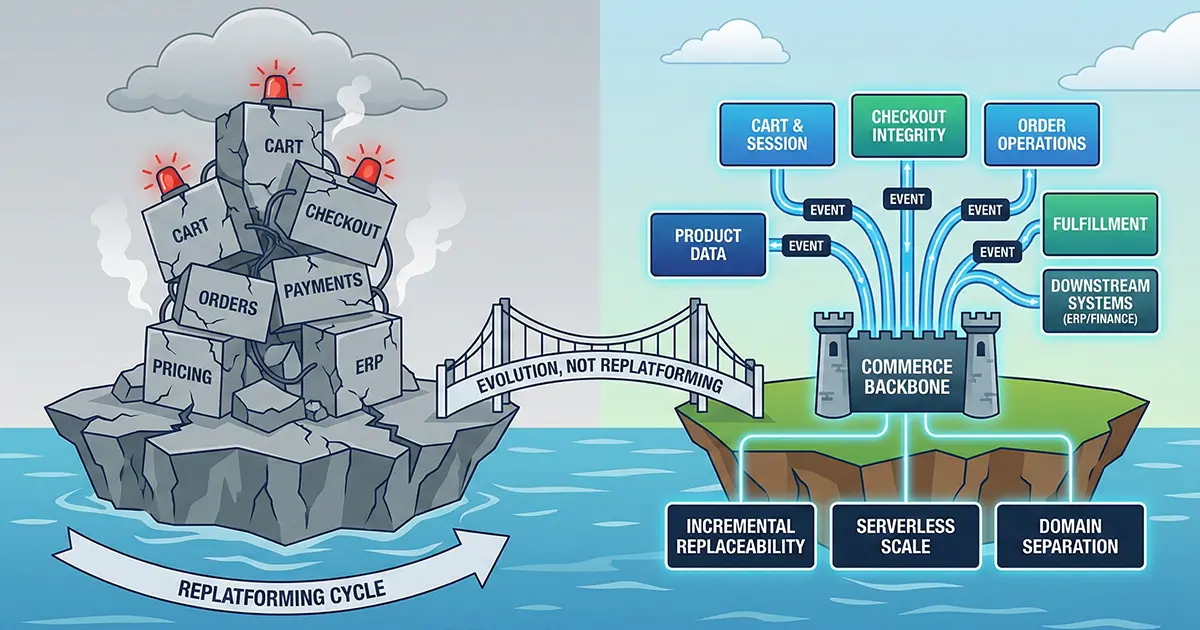
Money without an order is order state. A vanished event is order state. Five meanings in one status column is order state nobody ever modelled. Which means the fix is not a better connector. It's a system that owns the order from authorization to refund, and remembers everything that happened to it.
That is what an OMS is for. Not a module you bolt on. The place the order lives.
So that is what we built.
Brink OMS runs the whole life of an order on your rules. Capture, cancel, refund, modifications. Workflows your own team builds in the portal. Blocking states for orders that look wrong. Payment orchestration across providers, so support uses the same refund button no matter who holds the money. Four eyes on sensitive money operations. Stock events in seconds, not scheduled batches. Trigger an import twice and the second one loses the race with a 409 instead of creating a second order.
And the integration layer sits INSIDE that box. Around twenty connectors across CRM, WMS, ERP, POS and returns, which we build, run and monitor ourselves.
You don't have to connect everything on day one either. Brink receives orders from any frontend, validates and normalises them, while your ERP keeps running operations exactly as it does today. Order ingestion first. Operations later, at your pace.
Next is order decisioning: routing across warehouses, 3PLs and stores on rules, instead of hardcoded logic per integration and a spreadsheet for the exceptions. Not live yet. That's the build.
ERP and WMS execute. Brink decides.
Boring, invisible plumbing, which is Bruno's own point about what good integration looks like.
I'll keep labbing and posting.

Want to know more about modern commerce?
Get in touch with us to get the discussion started?
Get in touch