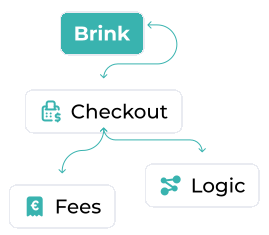
Cart and checkout run on an event-driven architecture that scales automatically, so a flash sale or a big campaign launch doesn't mean watching dashboards all day.
Stable checkout during peaks and campaigns, without last-minute firefighting.
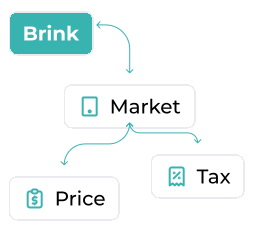
Brink stores only the base price. Campaign prices, discounts, bundles, and vouchers are all calculated the moment someone shops, based on their market, their cart, and the rules you've set.
Pricing that stays accurate everywhere, with far less manual upkeep.
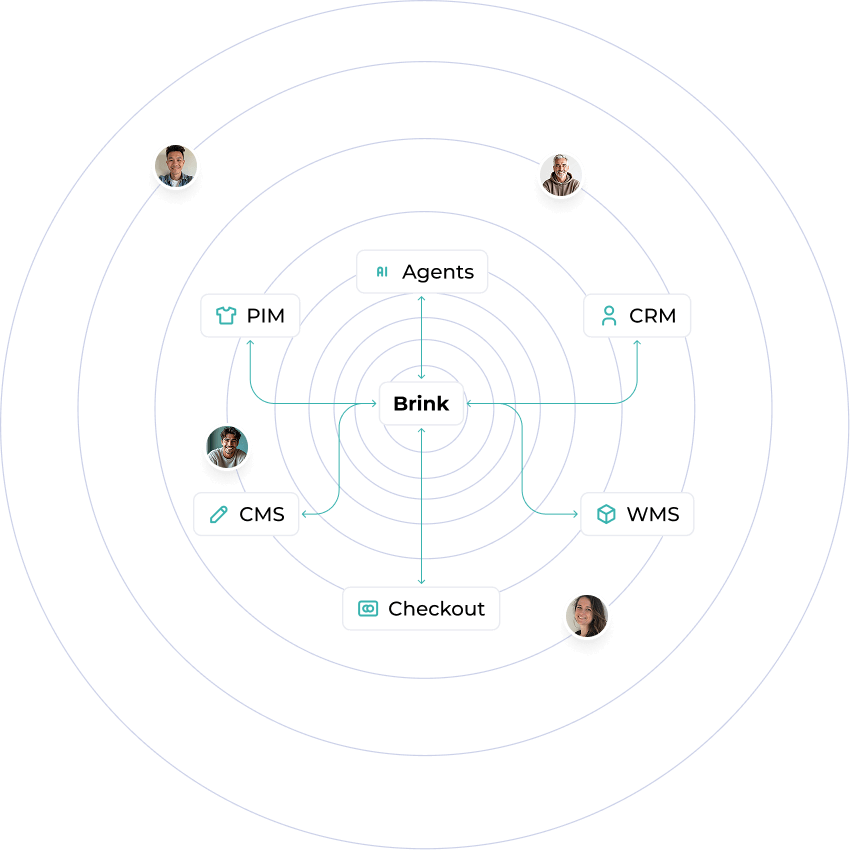
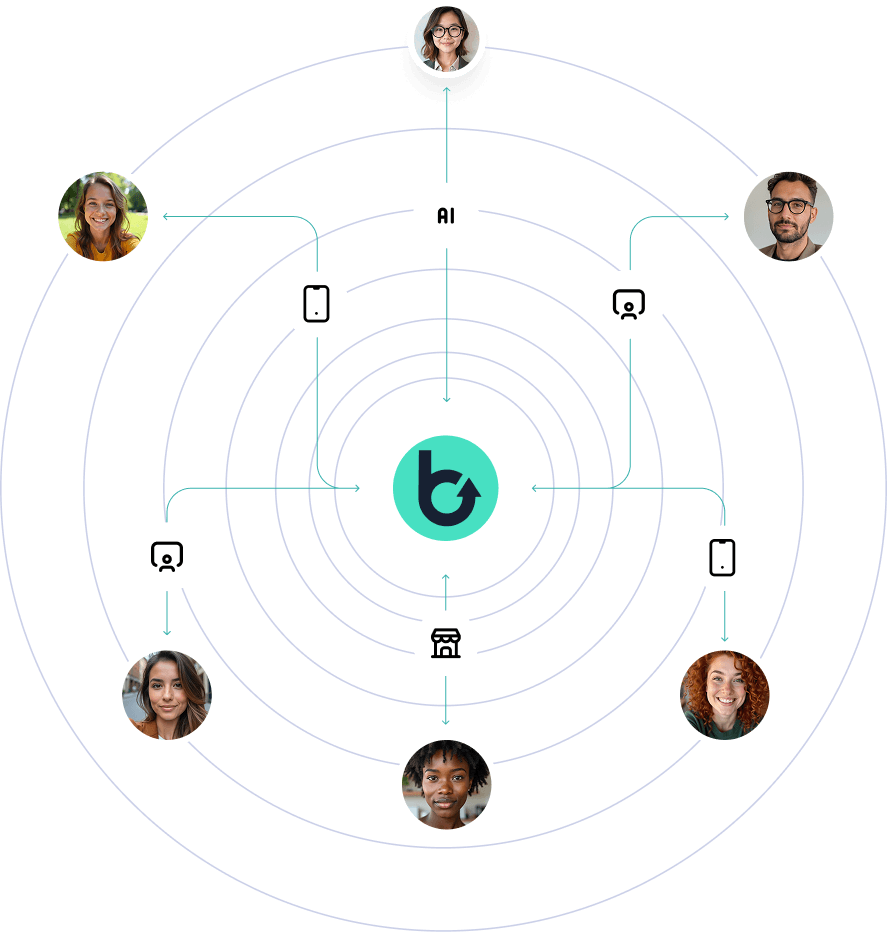
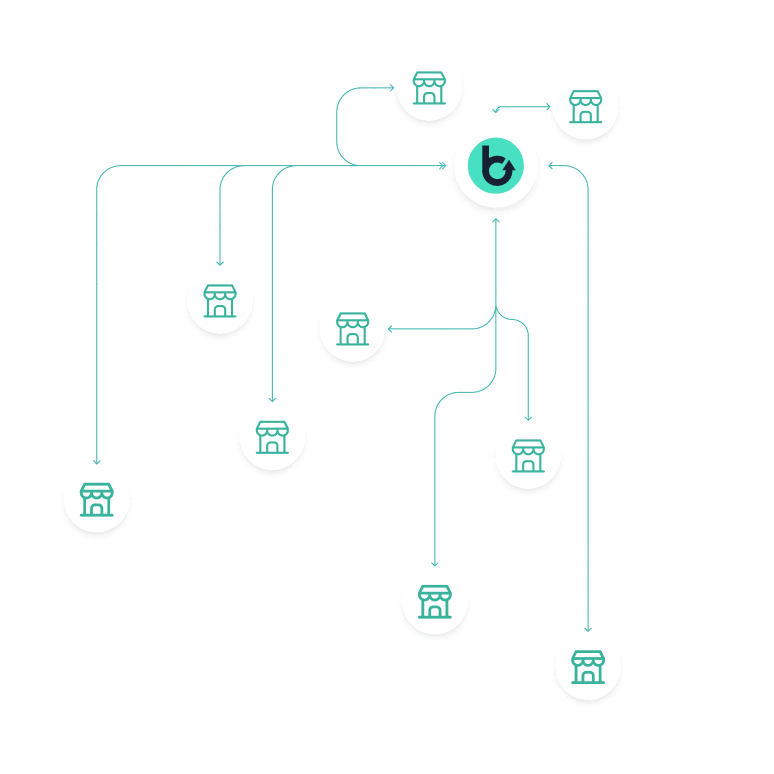
Web, app, marketplace, POS, or B2B: each channel runs on the same cart, checkout, and order model, configured per market instead of rebuilt from scratch.
Consistent behaviour across every channel, without maintaining a separate stack for each one.
Brink integrates the payment and shipping providers you already work with, Adyen, Klarna, Svea, Walley, Qliro, Avarda, Zaver, Ledyer, Ingrid, and nShift among them, behind a single order model. A refund or a delivery looks the same to your team no matter which provider handled it.
Lower risk, faster market entry, and more room to negotiate with providers on your terms.
Inventory checks and reservations happen inside the cart and checkout flow itself, using one stock model across every market, channel, and location.
Fewer failed purchases, less overselling, and inventory that behaves predictably even during a rush.
Each market is set up as B2C or B2B, with its own tax rules, payment options, and session data, so business buyers and everyday shoppers each get the experience they expect, without you maintaining two separate systems.
One platform serving both consumer and business buyers, each configured for how they actually buy.
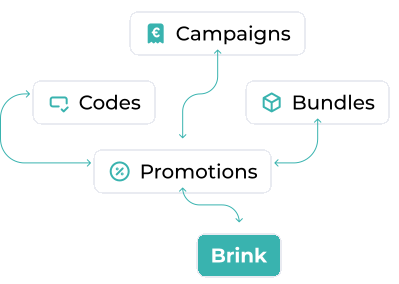
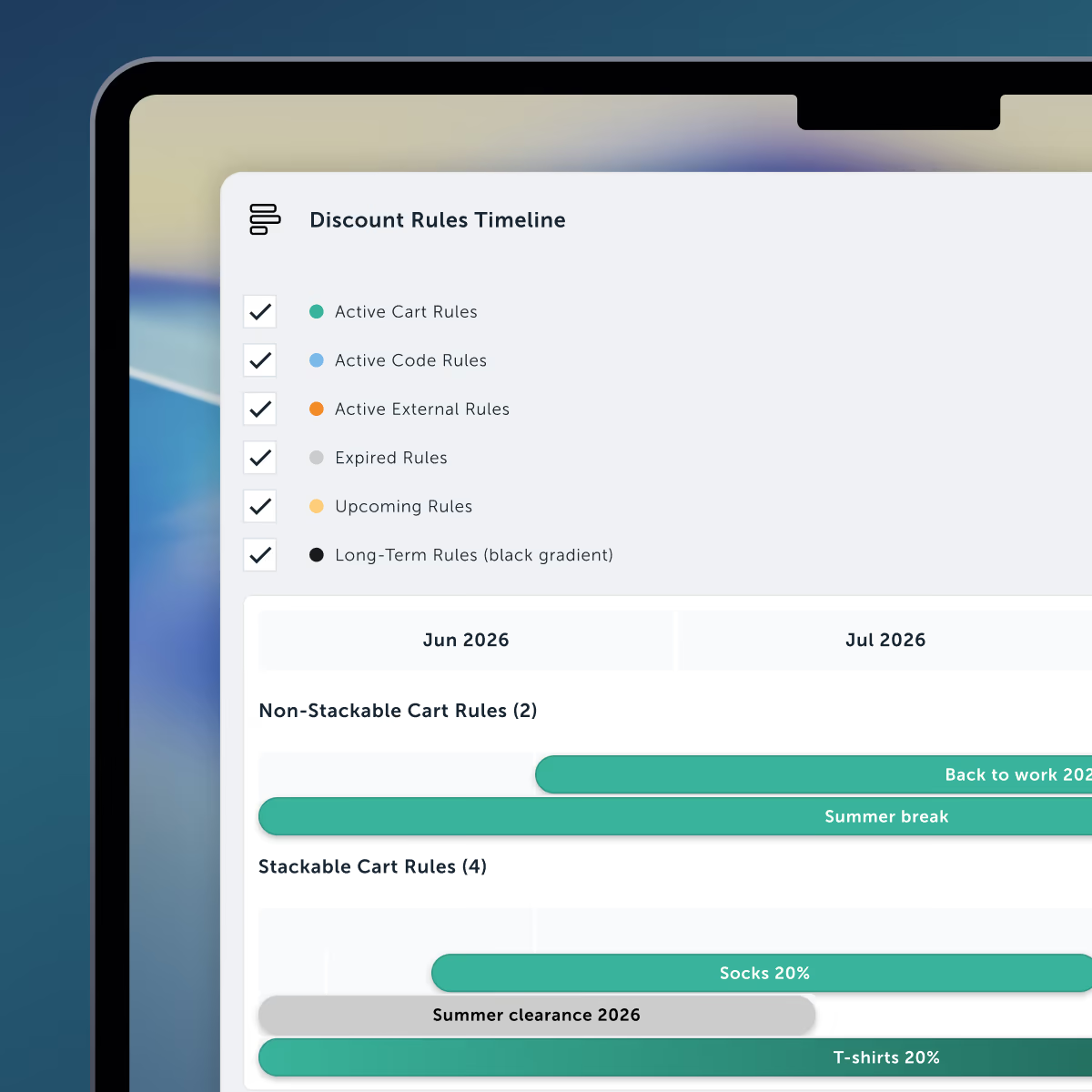
Discounts apply in a fixed order, campaign price first, then cart rules, then discount codes, so totals stay predictable and easy to explain when a customer or a support agent asks why a price is what it is.
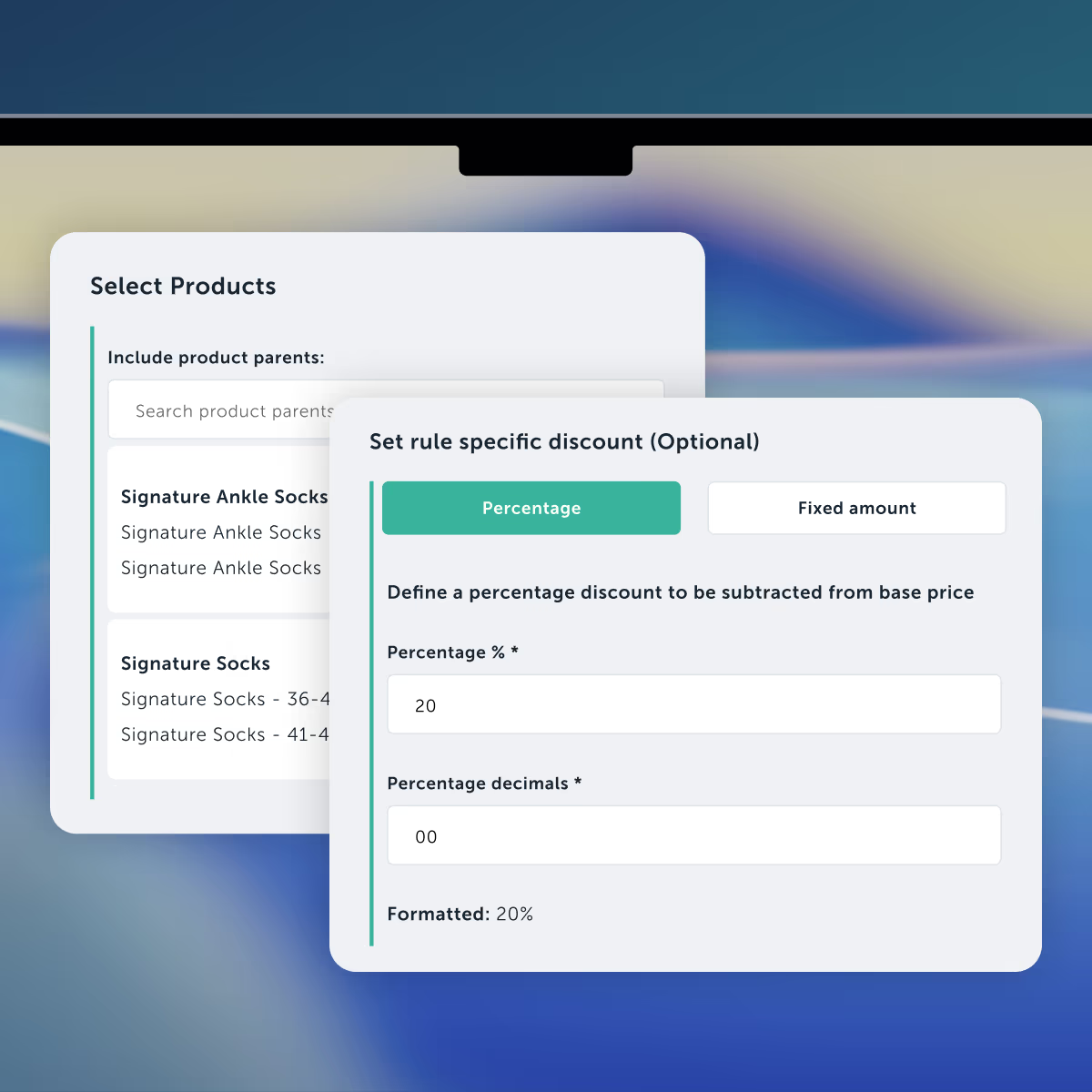
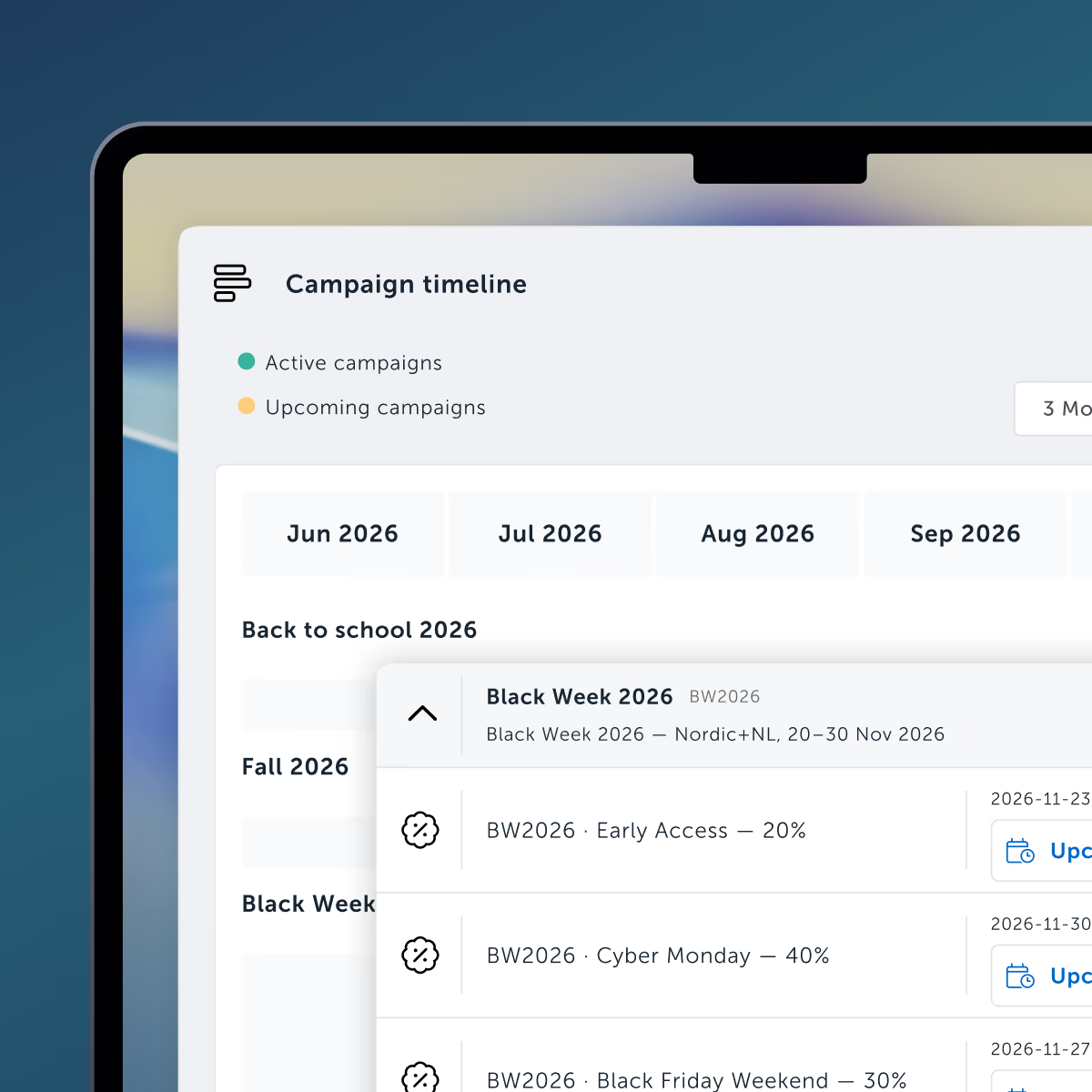
A time-bounded discount applied directly to the product price, by percentage or fixed amount, for any products matching the tags you choose.
What it means: run a sale or a seasonal price drop across a whole category without touching a single product record, and it switches itself off the moment the campaign ends.
An automatic discount that triggers when the cart meets a condition you've set, like a minimum spend or a tagged item in the basket.
What it means: "spend over 500 and get 10% off" applies itself the instant it's true, with no code needed, and can stack with your other rules.
A cart rule that only activates when the customer enters a specific code, with its own usage limit, validity window, and exclusivity setting.
What it means: run a one-off campaign code with a hard cap on redemptions, or make sure it can't be combined with other offers, without building new logic each time.
A defined group of product variants sold together at a set discount, based on tag conditions and quantities.
What it means: sell "buy the jacket, get the scarf at half price" as a single configured rule, instead of managing a bundle SKU by hand.
A discount rule triggered by an external system, such as a loyalty platform, carrying a reference back to where it originated.
What it means: loyalty rewards and third-party promotions run through the same cart and checkout logic as everything else, so support can trace exactly where a discount came from.


Conditions and outcomes combine to give you nearly endless ways to tailor your discounts.
A flat percentage or fixed amount off the whole cart
Waive the shipping cost entirely
Add a specific free product to the cart
Attach custom tags to order for downstream carrier or fulfillment logic
A percentage or fixed amount off every item matching a tag filter
A percentage or fixed amount off a limited number of matching items
Buy a set quantity of matching items, get a set quantity discounted.
The "buy" items and the "get" items are scoped by two different tag filters
The discount tiers are evaluated together, automatically applying the best result
Progressive discounts as quantity thresholds are crossed, by variant.
Progressive discounts as quantity thresholds are crossed, by product.
The order belongs to a specific store group or market
The cart contains items worth at least a set amount
The cart contains at least a set number of matching items
The whole cart is under a set amount
The whole cart is over a set amount


Powered by Brink Commerce API, this new venture is designed to ignite creativity and enhance the digital shopping experience for creators.
Read article