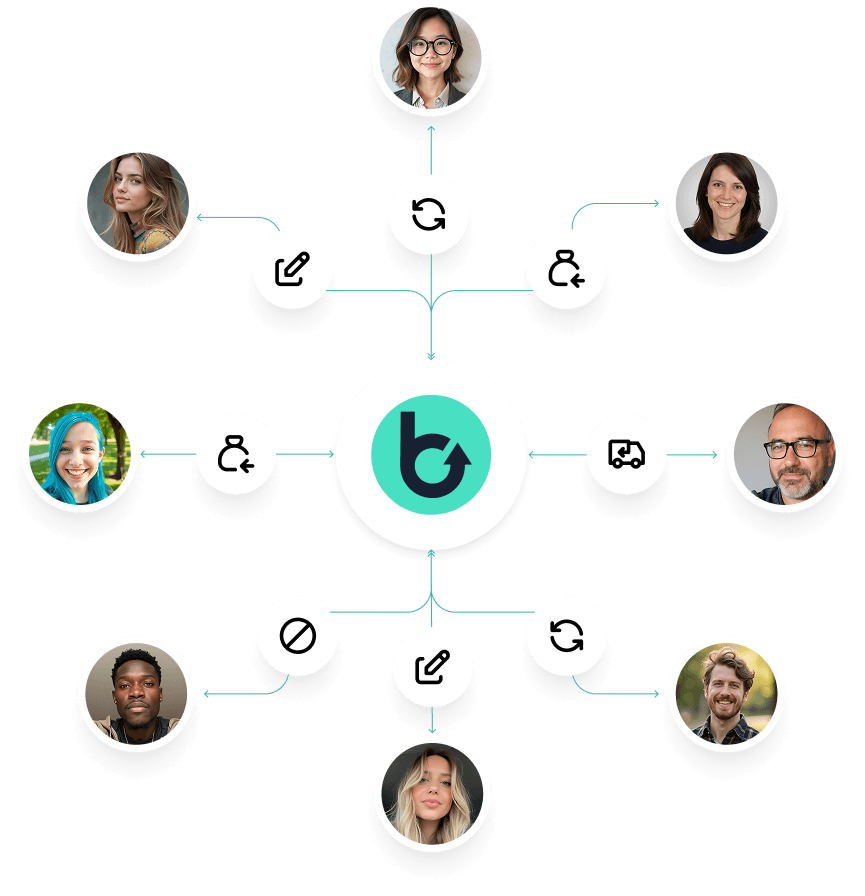
Delivery, cancellation, refund, compensation, release, and modification are all first-class operations with the same lifecycle: created, started, completed, or failed.
Fewer one-off exceptions, because the platform already has a defined way to handle them.
Custom states flag an order as informative, like "VIP customer," or blocking, where a blocking state stops specific operations, like delivery or cancellation, until it's resolved.
Fraud checks, compliance holds, and manual review happen without a special code path.
Every operation touches providers, payment, shipping, gift cards, tax, and each provider action can be set to automatic, manual, or skipped, at the moment you start or restart an operation.
Automation for the orders that don't need attention, control for the ones that do.
Every operation, every provider response, and every error is written to an append-only activity log on the order, queryable at any time.
Support answers "what happened to this order" without escalating it.
Merchant Portal covers order search, every operation, custom states, comments, and workflow management, backed by the same API your other systems use.
Ops and engineering work from the same data and the same controls, always.
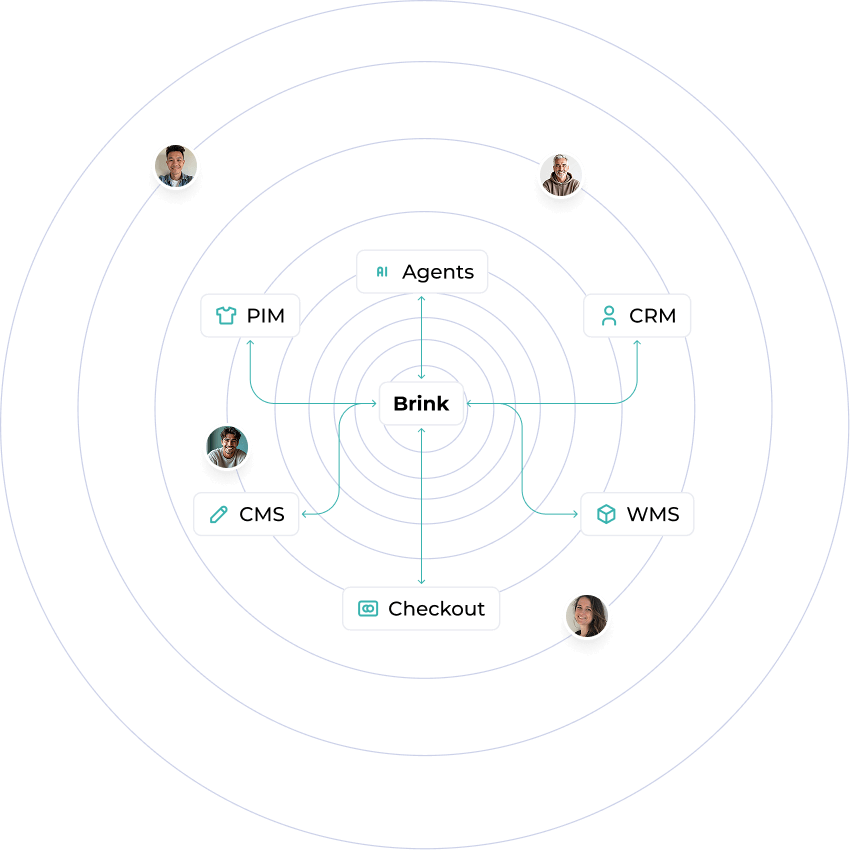
Order-management publishes events for every state change, delivery, cancellation, refund, compensation, release, so connected systems update automatically instead of polling for changes.
Systems downstream of Brink stay accurate without extra integration work.
Marks order lines as shipped, in full or in part, which triggers payment capture, gift card and bonus redemption, and tax reporting for those lines.
What it means: the moment stock leaves the building, the rest of the order, payment, loyalty, tax, catches up automatically.
Cancels an order before anything has been delivered. Once a single delivery exists, the order can no longer be cancelled outright.
What it means: a clean way to stop an order early, with a hard rule that prevents cancelling something already partly fulfilled.
Reverses payment, gift card, bonus, or voucher value for items from a completed delivery.
What it means: refunds are tied to what was actually delivered, so the amount reversed always matches something real.
A goodwill credit that doesn't require a delivery at all.
What it means: handle a service failure or a complaint with a credit, without needing to reverse an actual delivered item first.
Releases the remaining, undelivered part of an order once at least one delivery has completed and none are in progress.
What it means: close out the part of an order that's never going to ship, cleanly, once you know what has and hasn't gone out.
Changes order lines, shipping fees, or addresses, before or after delivery depending on the type.
What it means: fix a shipping address or adjust a fee after the fact, without cancelling and re-creating the whole order.


How Adlibris rebuilt search, promotions, cart, and checkout in 5 months, using Brink Commerce to power its transactional core across the Nordic markets.
Read article