Let's talk about how we can support you on your eCommerce journey. Submit your details below and we will get back to you as soon as possible. No strings attached.
We speak
Thank you! Your submission has been received!
Oops! Something went wrong while submitting the form.
Thank you! Your submission has been received!
Oops! Something went wrong while submitting the form.
From search to guidance: Brink Commerce launches AI-powered Shopping Assistant
October 28, 2026
Product News
Generative AI and chatbots are driving a shift in consumer behaviour. Customers increasingly expect more than filters, search bars, and static product pages. They expect intelligent guidance that understands what they are trying to achieve.
This shift is especially clear in categories with technically advanced products, where the right choice often depends on context:
Intended use
Weather conditions
Performance requirements
Fit and sizing
Materials and technical features
Compatibility with other products
Personal preferences
Merchants are increasingly looking for ways to use AI in commerce without losing control of the customer experience. The opportunity is not only to automate interactions, but to create a more guided and personal shopping journey while still owning the interface, the communication and the brand experience.
Global players such as Amazon have already shown the potential of AI-powered shopping assistants, with Rufus setting a clear direction for where digital commerce is heading.
From search to guidance
To support this shift, Brink Commerce is launching its new AI-powered Shopping Assistant. The solution is designed to help consumers find the right products through natural language questions, contextual recommendations, and direct access to product data.
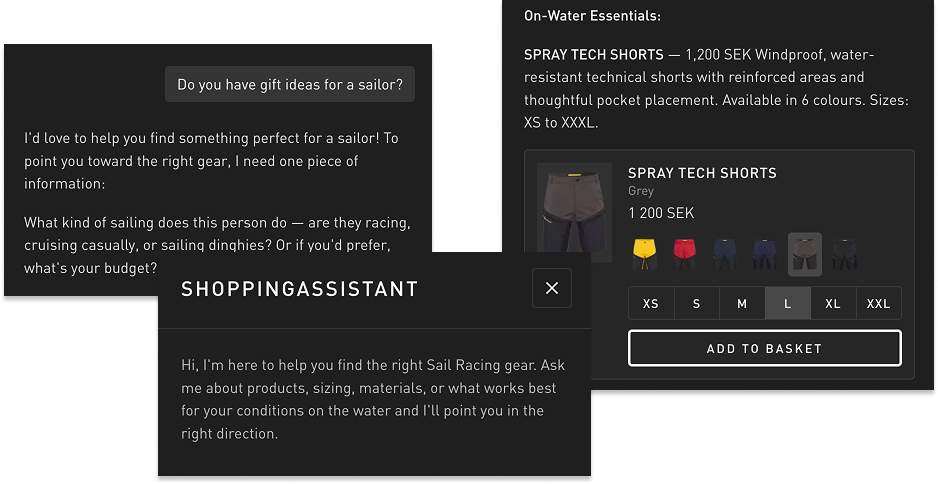
The first customer to implement the Shopping Assistant is Sail Racing, the Swedish performance clothing brand known for innovative and technical gear for high speed sailing. .
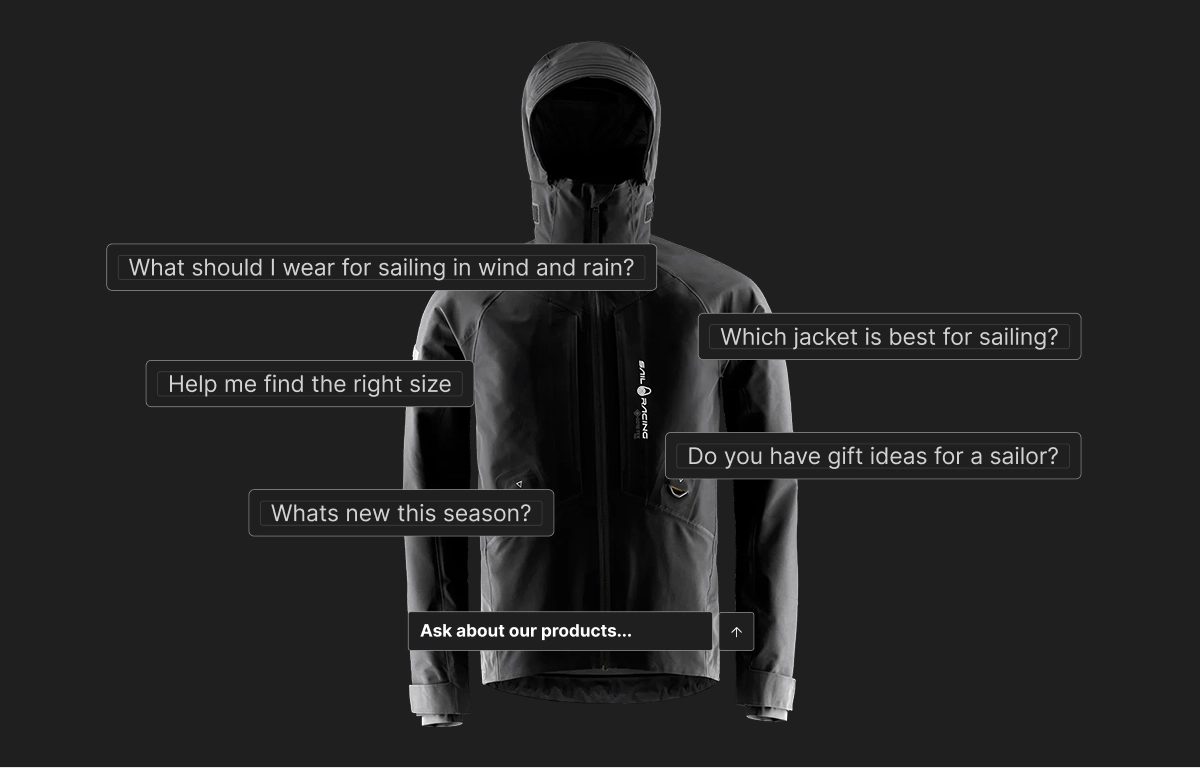
With the Shopping Assistant, customers can describe what they need in their own words instead of having to know the exact product name, category, or technical specification.
For example, a customer could ask the assistant to:
Find a jacket suitable for sailing in specific weather conditions
Compare the differences between two products
Recommend products that complement an existing item
Help choose between different materials, fits, or technical features
Move from a general need to a relevant product recommendation
Built for advisory commerce
For Sail Racing, the assistant will be connected to the brand’s product catalog and designed to support a more advisory shopping experience. The goal is to help customers move from need or question to relevant product recommendations more quickly, while reducing friction in the buying journey.
“Digital commerce is moving from search to guidance. Customers increasingly expect online stores to understand their intent, not just match their keywords. With our Shopping Assistant, we want to bring expert product guidance into the digital buying journey — and make it directly connected to the commercial infrastructure behind the store,” says John Osvald, CPO at Brink Commerce.
Connected to the commercial core
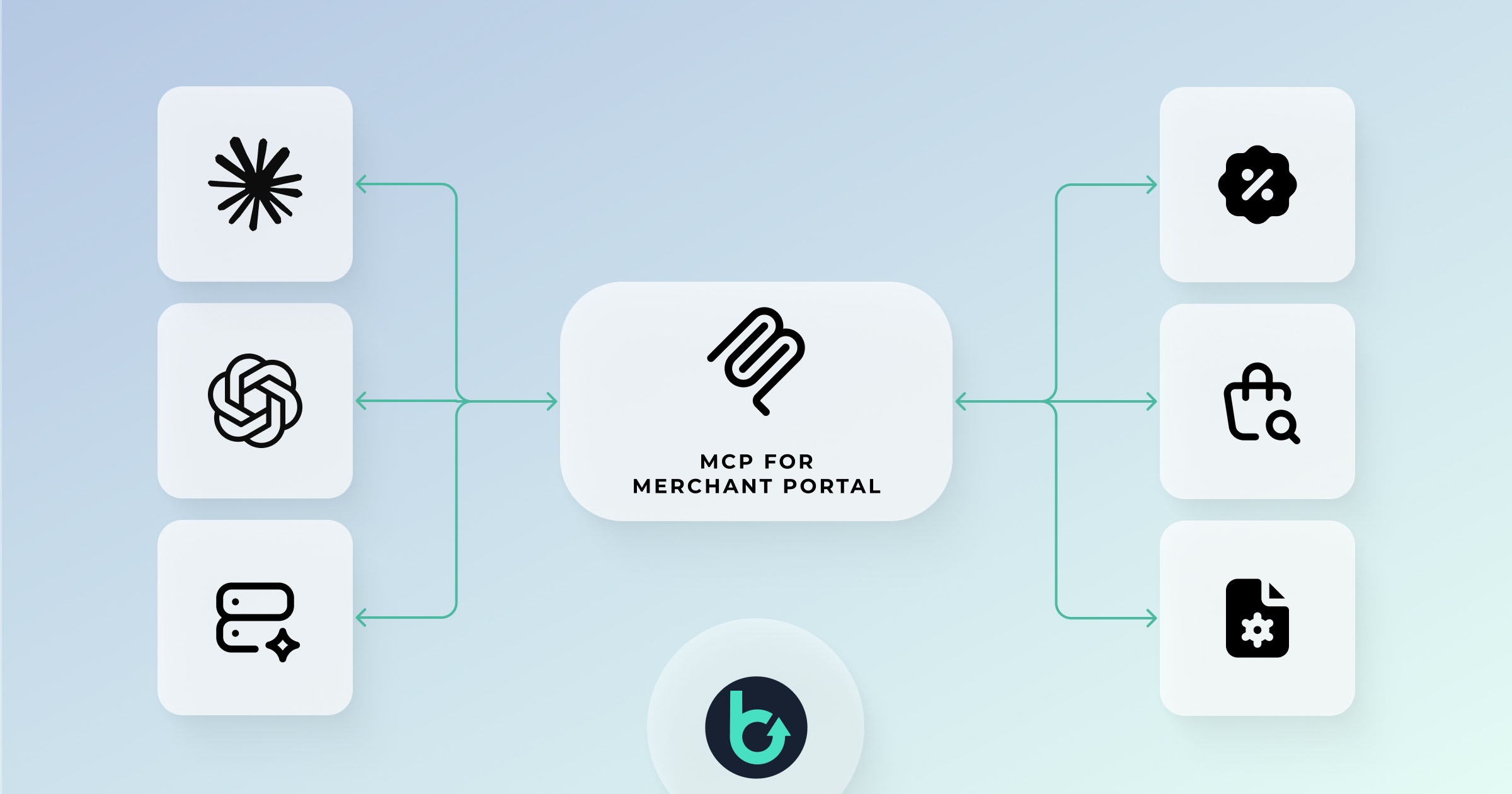
The Shopping Assistant is built to work close to the transaction. It can be connected to product information, variants, pricing, stock availability, customer context where relevant consent exists, and cart functionality.
This makes it possible to support the customer across several stages of the buying journey:
Inspiration and exploration
Product discovery
Product comparison
Recommendation and selection
Decision-making closer to purchase
Adding relevant products to cart
For Brink Commerce, the launch marks an important step in making AI a practical part of modern commerce architecture. Rather than treating AI as a separate layer on top of the customer experience, the Shopping Assistant is designed to connect intelligence with the operational core of commerce.
Sail Racing will be the first customer to use the new solution, as Brink Commerce prepares to make the Shopping Assistant available to more brands and retailers.
About Brink Commerce
Founded in 2020 by Kristian Tysander, Marcus Ljungberg, and Patrik Antonsson, Brink Commerce offers a modern eCommerce platform built for forward-looking merchants and retailers. Designed to support fast growth and constant change, it enables seamless customer experiences, operational efficiency, and global scalability.
More Information
For more information or media querys, please contact Kristian Tysander, CEO