Building headless eCommerce should give teams more freedom, not more friction. Agencies and in-house development teams are often asked to move fast, create custom storefronts, support multiple markets, and connect a growing number of services across the commerce stack. But there is a catch.
When teams build storefronts from scratch, they often spend too much time on work that should not have to be rebuilt for every project. Session handling. Checkout tokens. Cart state. Payment and shipping synchronization. Error handling. Provider-specific logic. The kind of work that is critical, but rarely visible to the customer.
Brink Commerce has launched the Shopper SDK to remove that friction.
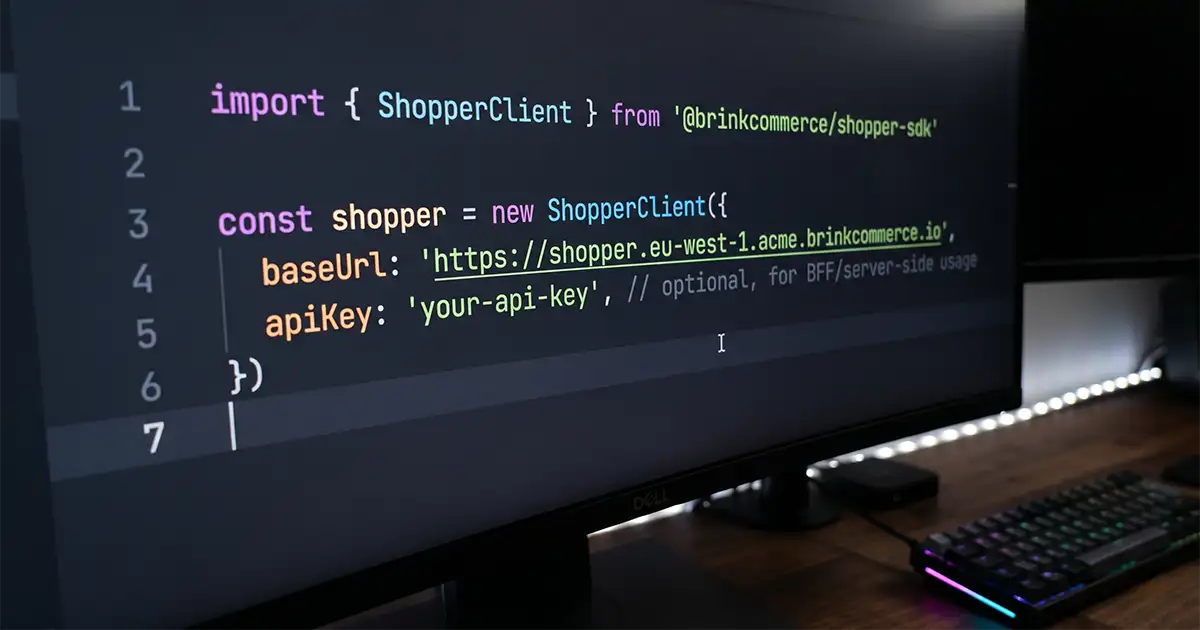
The Shopper SDK is a TypeScript library that wraps the Brink Shopper API and gives teams a reliable foundation for building secure carts, high-performing storefronts, and seamless checkout experiences.
It is built for the teams who actually create the customer experience: digital agencies, frontend developers, solution architects, and in-house commerce teams.
Less boilerplate, more storefront
Modern eCommerce projects often involve several moving parts. The storefront needs to talk to the commerce engine, payment providers, shipping services, tax logic, discount rules, and order flows.
Without a dedicated SDK, development teams have to manually orchestrate these connections. They need to manage session tokens, track checkout state, handle provider updates, and make sure that the total shown to the shopper always matches the cart.
That work takes time. It also creates risk.
A small mismatch between cart, shipping, and payment data can lead to broken checkouts, abandoned carts, and support issues. During high-traffic events such as product drops, campaigns, and seasonal peaks, those weak points become even more exposed.
The Shopper SDK gives teams a more stable starting point.
Instead of rebuilding the same integration logic again and again, agencies and in-house teams can build on a type-safe, production-ready layer designed for real commerce use cases.
Built-in session and token management
Public-facing storefronts need secure session handling. But managing tokens manually is time-consuming and easy to get wrong.
The Shopper SDK handles session and checkout tokens behind the scenes. It issues, stores, and refreshes tokens, reducing manual work for developers while helping keep the checkout flow secure.
For teams building several storefronts, brands, or market rollouts, this matters. It means less repeated setup, fewer fragile custom implementations, and a more consistent foundation across projects.
Provider synchronization out of the box
Payment and shipping integrations are a common source of complexity in headless builds.
When a shopper changes address, shipping method, delivery option, or payment method, the storefront needs to keep cart totals, taxes, shipping costs, and provider widgets in sync.
The Shopper SDK includes built-in support for providers such as Adyen, Klarna, Ingrid, and nShift, and many more. It helps synchronize state across the checkout flow so teams do not have to write and maintain custom coordination logic for every implementation.
The result is a cleaner build process for developers and a more reliable checkout experience for shoppers.
Faster checkout page loads
Checkout speed matters.
In many storefronts, loading the checkout page triggers a new checkout creation request, even when nothing has changed in the cart. That adds latency and creates unnecessary calls.
The Shopper SDK includes smart checkout reuse. It can check whether the cart, discounts, shipping choices, or other relevant data have changed. If the checkout is still valid, the existing state can be reused instead of recreated.
That means fewer round-trips, faster page loads, and a smoother experience for the customer.
Type-safe development for modern frontend teams
The Shopper SDK is built in TypeScript and designed for modern frontend workflows.
Types are generated from the Brink Shopper OpenAPI specification, helping frontend teams stay aligned with the platform. That makes it easier to catch issues during development instead of discovering them in production.
For agencies, this means faster onboarding and a more predictable delivery process. For in-house teams, it means better maintainability and less dependency on undocumented custom logic.
Built for teams that need to move fast
The Shopper SDK helps agencies and in-house teams build faster without giving up the flexibility of a composable architecture.
For agencies, it creates a stronger foundation for client projects. Teams can spend less time on repetitive integration work and more time on the storefront, UX, performance, and business logic that make each brand unique.
For in-house teams, it reduces maintenance overhead. It gives developers a consistent way to work with carts, checkout, sessions, and provider synchronization across markets, brands, and storefronts.
For architects and technical leads, it supports a clean separation between the frontend experience and the commerce core. Teams can keep the flexibility of a headless setup while reducing the complexity that often slows projects down.
A faster path from architecture to customer experience
Modern, flexible commerce gives brands the freedom to shape their commerce stack around their business.
The Shopper SDK makes that freedom easier to use.
By removing repetitive integration work and standardizing critical parts of the shopper journey, Brink Commerce helps agencies and in-house teams build storefronts that are faster to launch, easier to maintain, and more resilient in production.
Less plumbing. More commerce.
Learn more about the Shopper SDK